


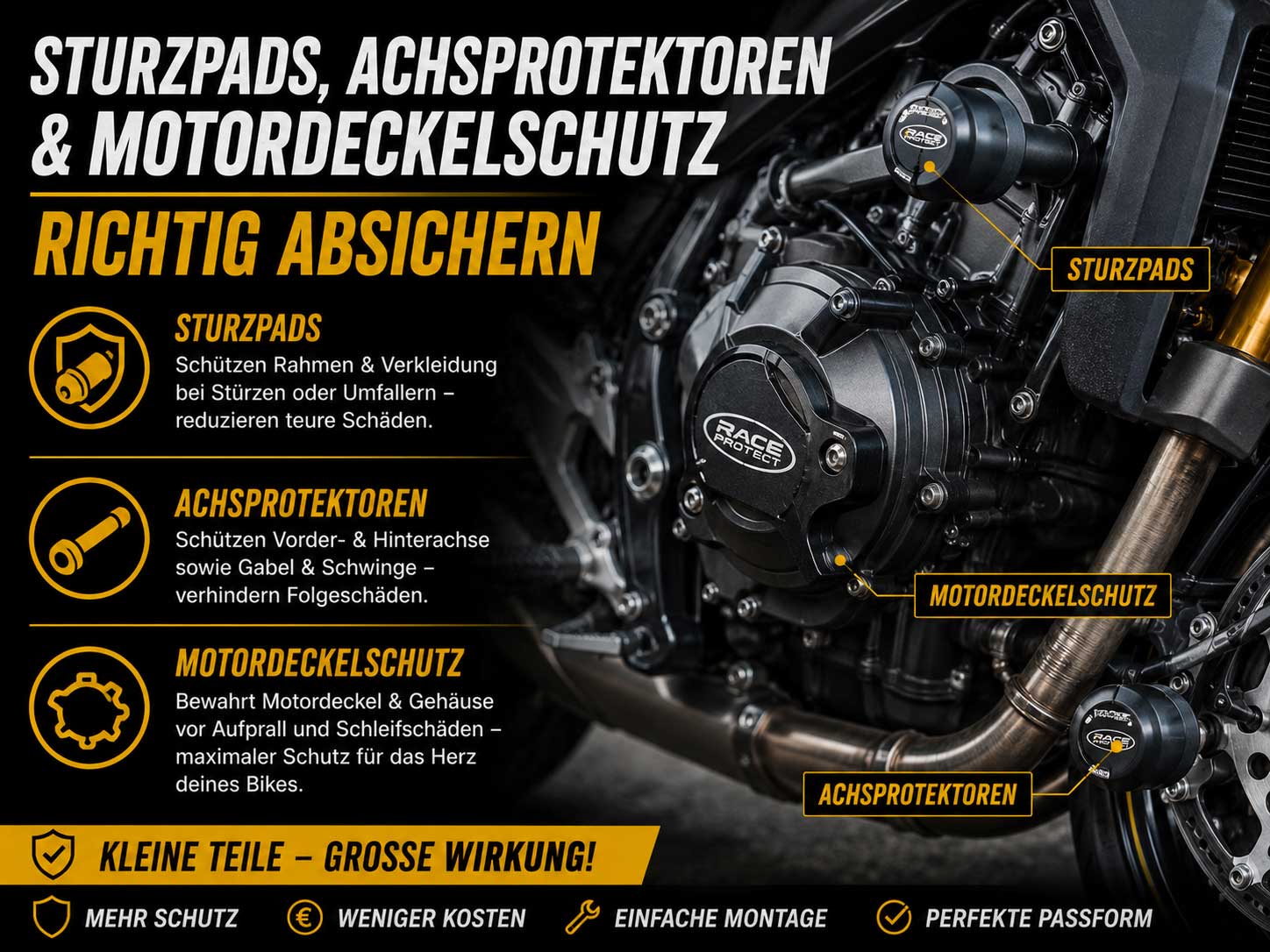
Crash pads, axle protectors & engine cover protection - the right protection
Have you ever wondered how you can best protect your bike from serious damage? Whether on the home track or at a trackday - the safety of your bike is always a factor.
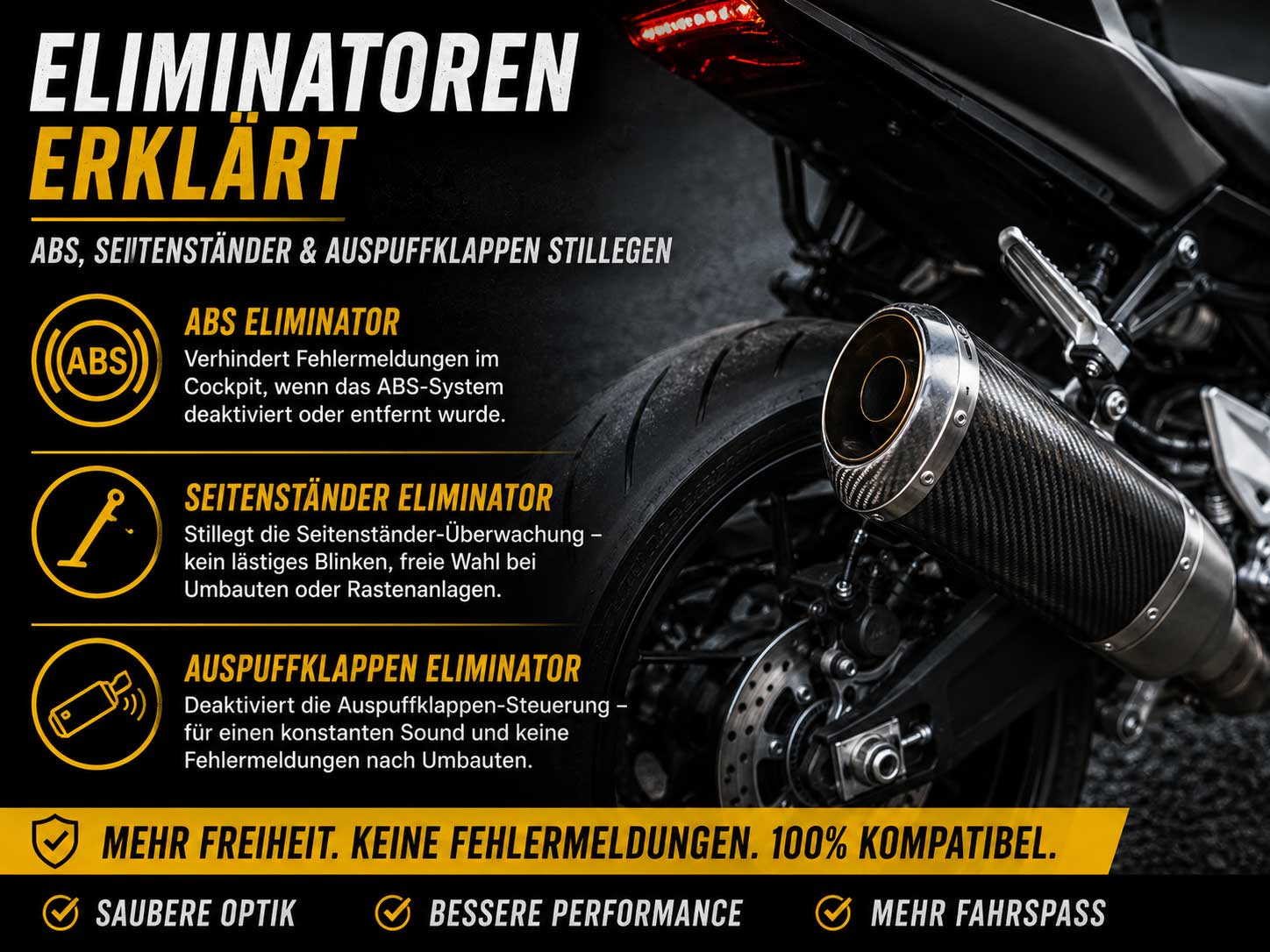
Eliminators explained - ABS, side stand & exhaust flaps deactivated
Do you know the feeling? You want to optimize your bike for the racetrack, but the on-board electronics keep getting in the way. Modern bikes are packed with sensors and switches. What makes sense on the road quickly becomes unnecessary ballast when racing. This is where so-called eliminators come into play. Let's find out how to free your bike from electronic shackles & regain full control.
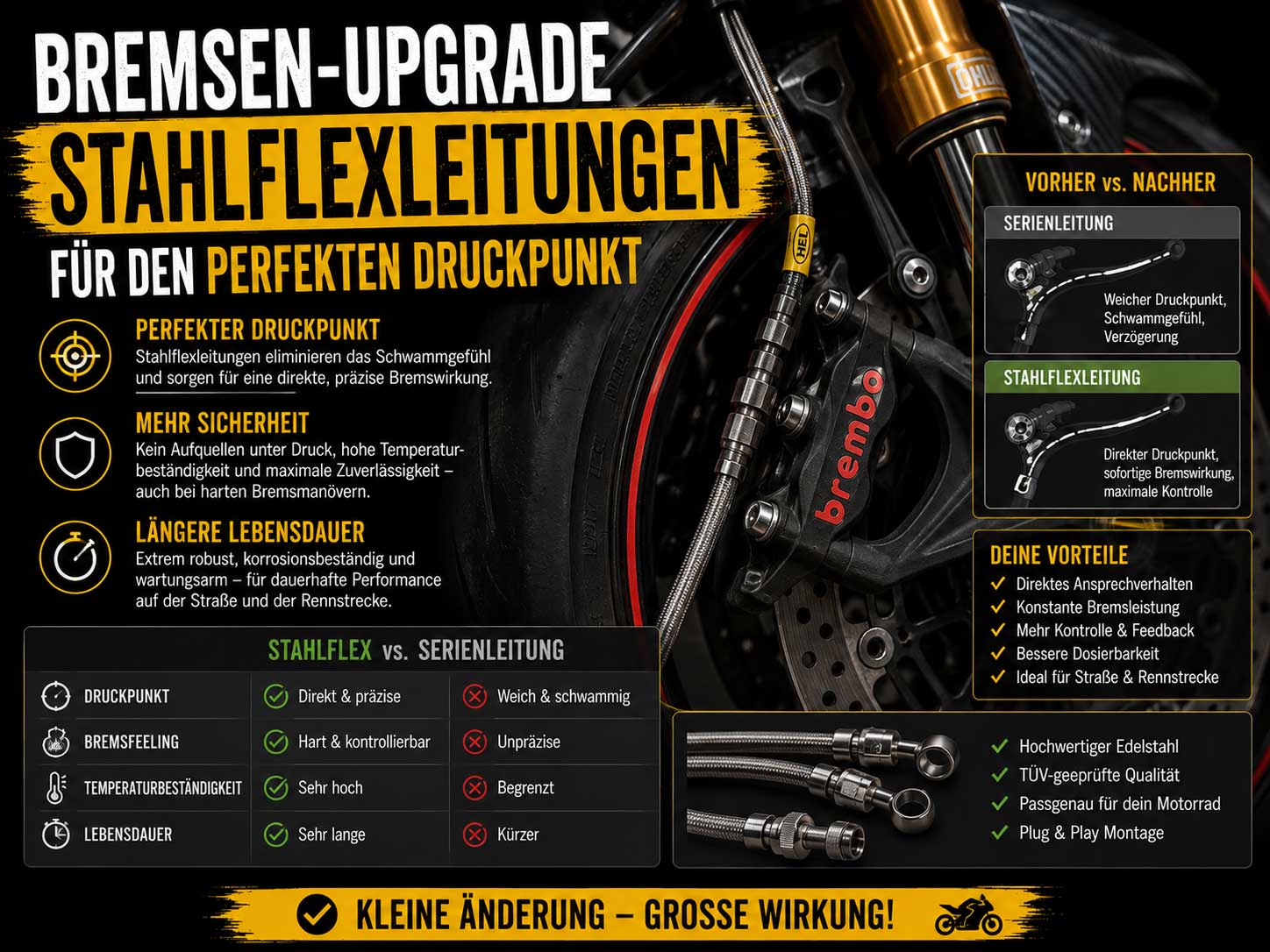
Brake upgrade - steel flex lines for the perfect pressure point
Who brakes later - is faster for longer Do you know the feeling when you're approaching the next bend, pull the lever & the pressure point softens right at that moment? Nothing ruins your confidence in your bike faster than a brake that gives way when it really matters. Hard, precise anchoring decides milliseconds on the clock & your safety in the saddle.
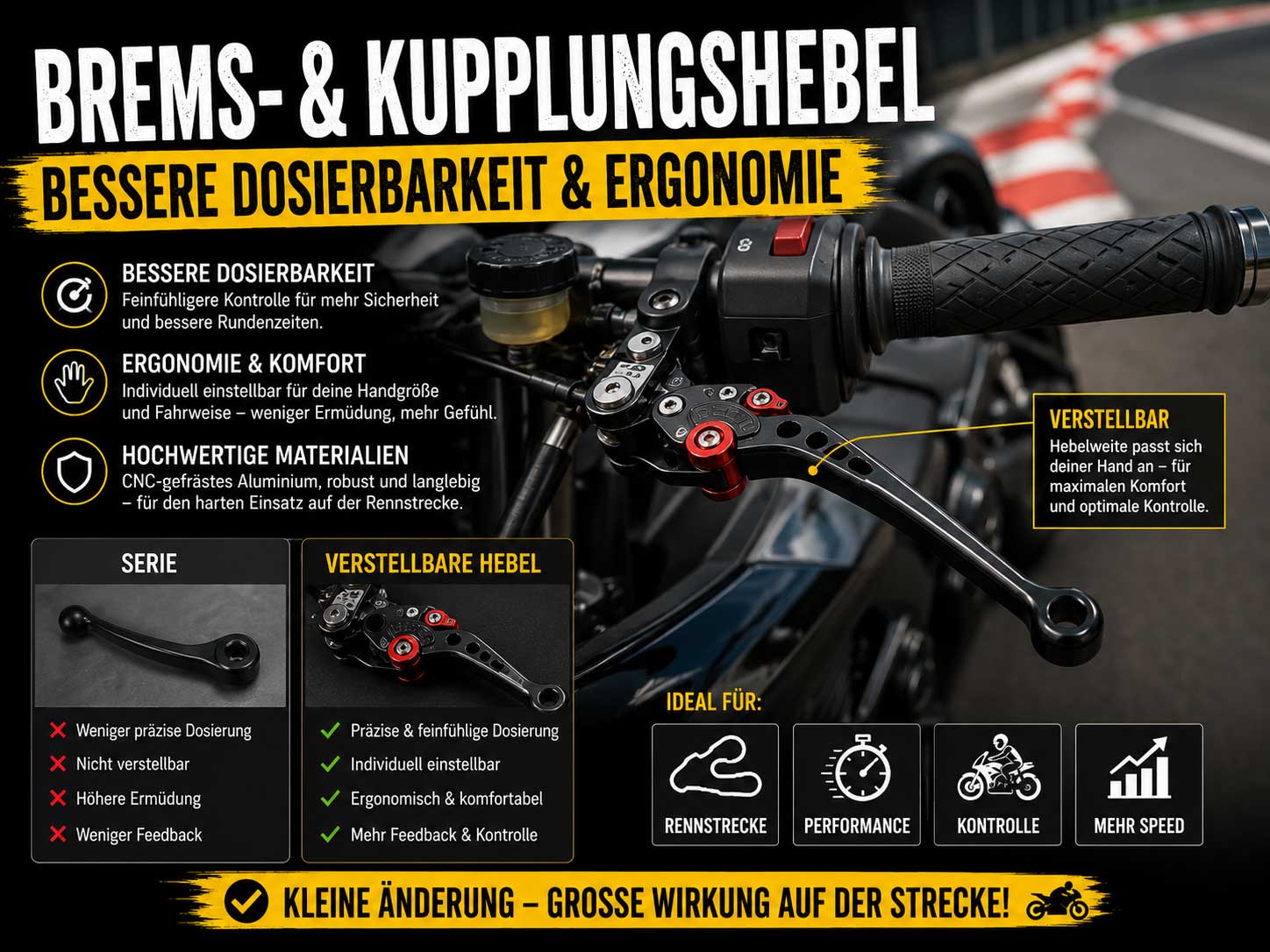
Brake and clutch levers - Better modulation and ergonomics
The crucial connection between rider & machine Do you know the feeling when the lever feels a bit doughy when anchoring hard before a corner? Your hands are the most direct points of contact with your bike. This is where you decide how precisely you brake & how cleanly you shift gears. An upgrade in this area changes your entire riding experience.
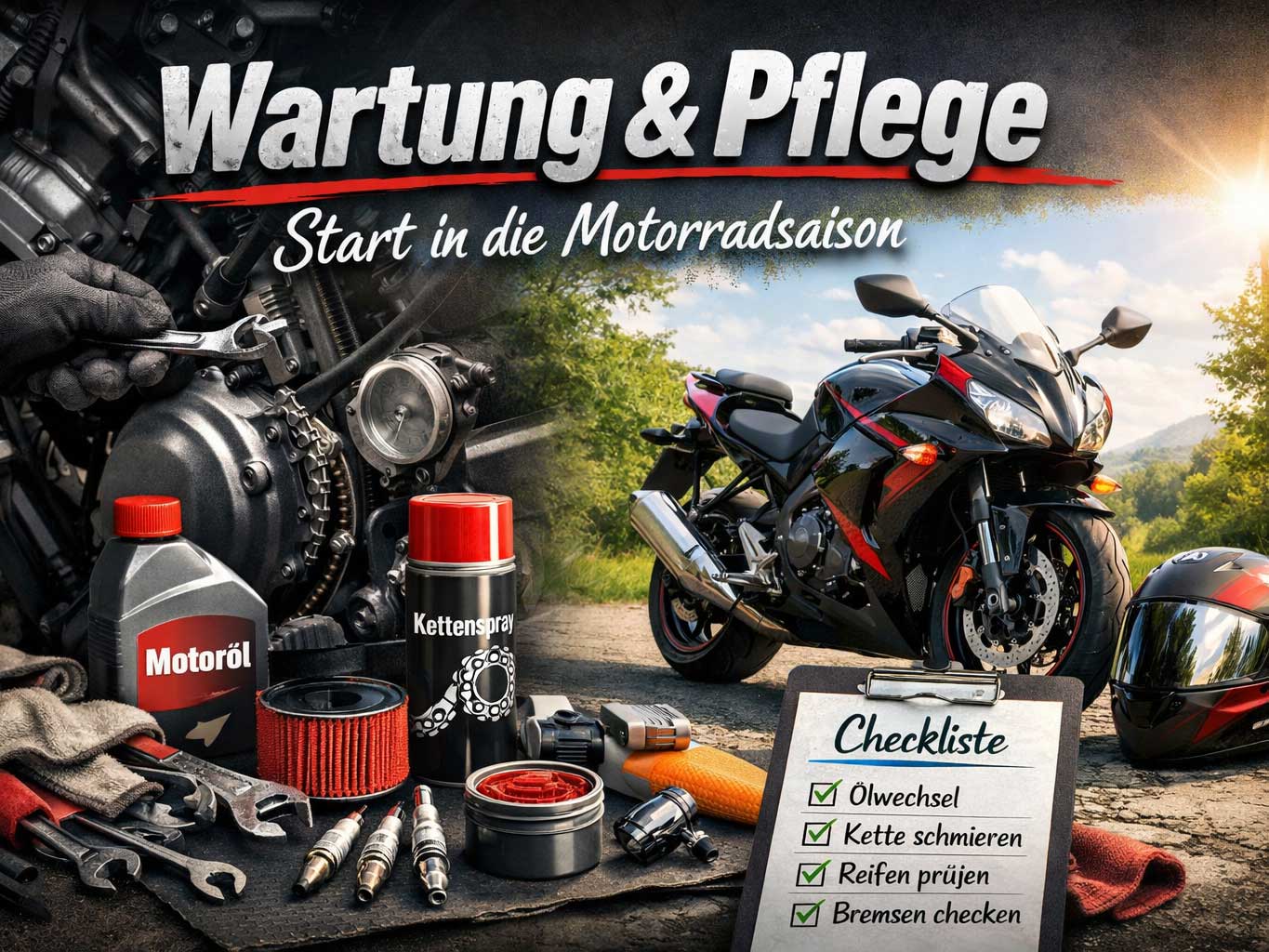
Maintenance & care at the start of the motorcycle season
If you are not a year-round rider, you will have sent your bike into hibernation in late fall. This is also the ideal time to carry out repairs or cosmetic work in the form of paintwork. Beautifully cleaned, rid of any rust, with fresh oil and changed brake fluid, the bike is waiting to be woken from hibernation at the start of the new motorcycle season.
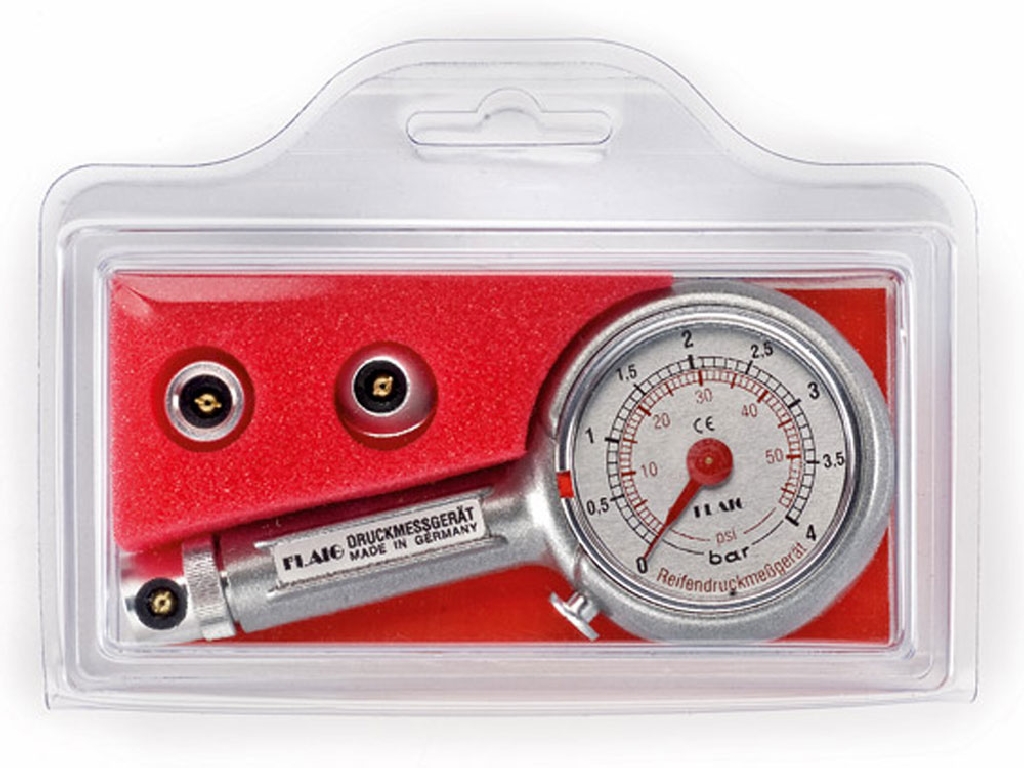
Tire pressure for motorcycles: what matters
The tire pressure of your motorcycle affects its performance and safety. It is therefore essential to know the correct pressure for your machine. After all, the air in the tires not only carries the weight of the motorcycle itself. There is also the weight of the crew and luggage. If the air pressure is not correct, this will be noticeable while riding. The handling and rideability of the machine suffer as a result. In addition, there is increased wear and tear and overall this has a negative effect on riding safety.
Motorcycle battery maintenance and care
For a safe and puncture-free ride, the motorcycle battery is one of the essential parts on the bike. Without it, the engine remains silent and nothing works. The battery is hidden under the seat or the fairing. As long as it works, it usually receives little attention. This is fine until it unexpectedly stops working. Then nothing works electrically. To prevent this from happening, we have compiled some interesting facts about motorcycle battery maintenance and care for you.
Motorcycle conversion: Is anything you like allowed?
Are you striving for perfection with your motorcycle? To achieve this, you can make various modifications to your bike. We have compiled the most important information for you in this article to help you achieve your dream bike.
Motorcycle tuning
For many bikers it is a dream and a hobby in one: tuning and converting their own bike. This can result in true works of art on two wheels. However, there are a few things to bear in mind to ensure that the TÜV inspector approves the conversion measures and that there are no problems during traffic checks. You can find out what is important in this article.
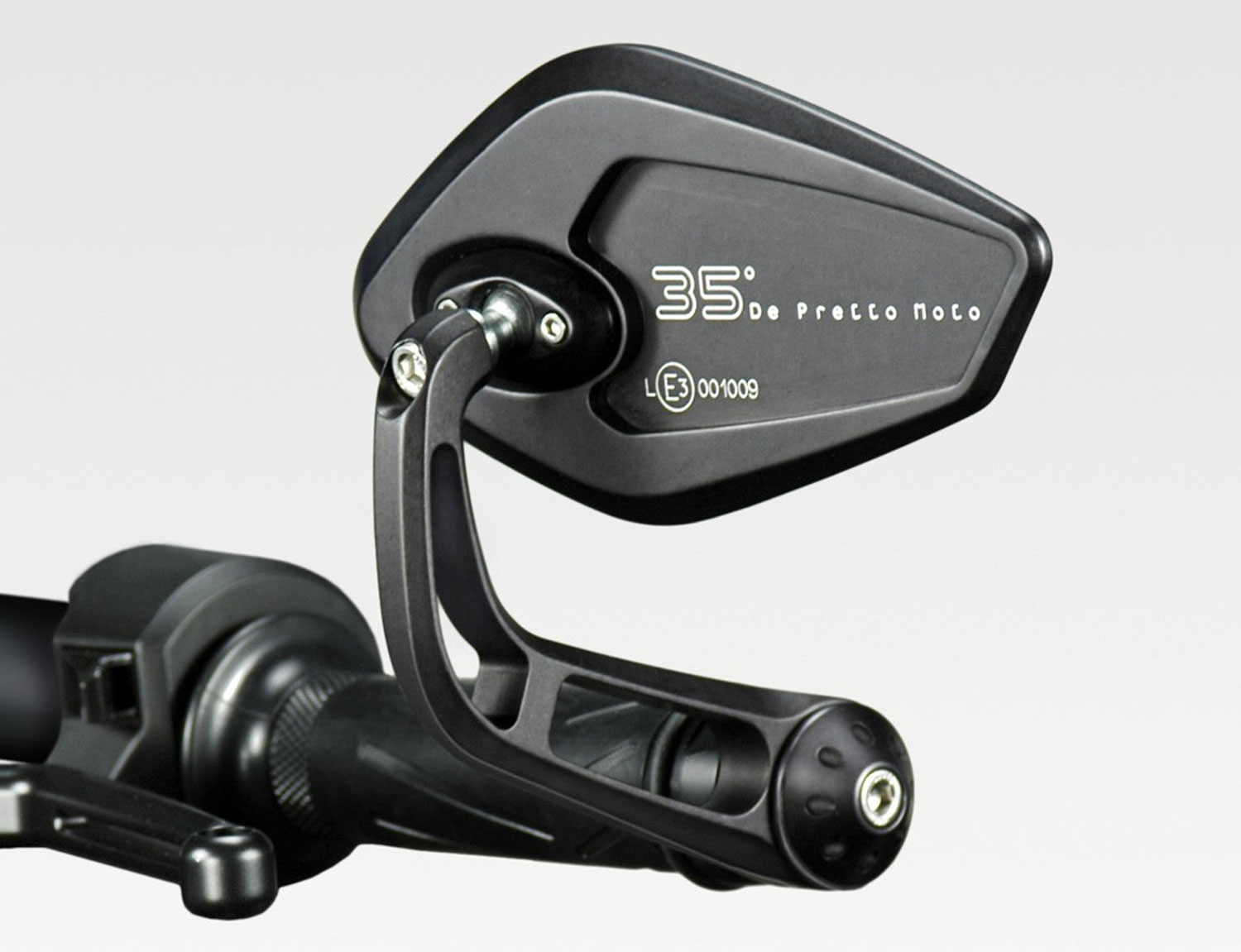
Motorcycle mirrors - size and regulations
Mirrors on a motorcycle are a must - and not just because they are required by law. They ensure that you can keep a safe eye on the traffic behind you at all times without having to contort yourself dangerously. Even if the legislator sets strict specifications for the reflective add-on parts, there is still some leeway in terms of their size and installation and therefore a few things to bear in mind.
Jacking up your motorcycle correctly - here's how
Jacking up your motorcycle is an important skill that every motorcyclist and mechanic should master. It makes maintenance work, changing tires and cleaning the motorcycle easier. Before you start jacking up, make sure that you are working on a flat and firm surface. This will prevent your motorcycle from tipping over during the process. Also put on protective gear, especially gloves, to avoid injury. Check your motorcycle stand (main stand or assembly stand) for damage and stability.
Bleeding motorcycle brakes
If you have to hit the brakes again on a tour to avoid an accident, it is important to be able to rely on fully functional brakes. To keep it that way, you should change the brake fluid once a year. Here you can find out how to keep the hydraulics of the brake system in good working order.
Maintaining, servicing and improving the brake system on your motorcycle - tips from TecBike
In this article, we show you what really matters when it comes to maintenance, care and sensible tuning of the brake system. Whether brake line, brake pump, pads or calipers - here you can find out what you need to pay attention to in order to stay safe on the road.
Winterizing the motorcycle
As more and more bad weather fronts dominate the weather map and the days get shorter again, the time has come for most bikers to send their motorcycles into a well-deserved winter rest. However, for many motorcycle owners, winterizing the bike is often already on the agenda at the end of October.